

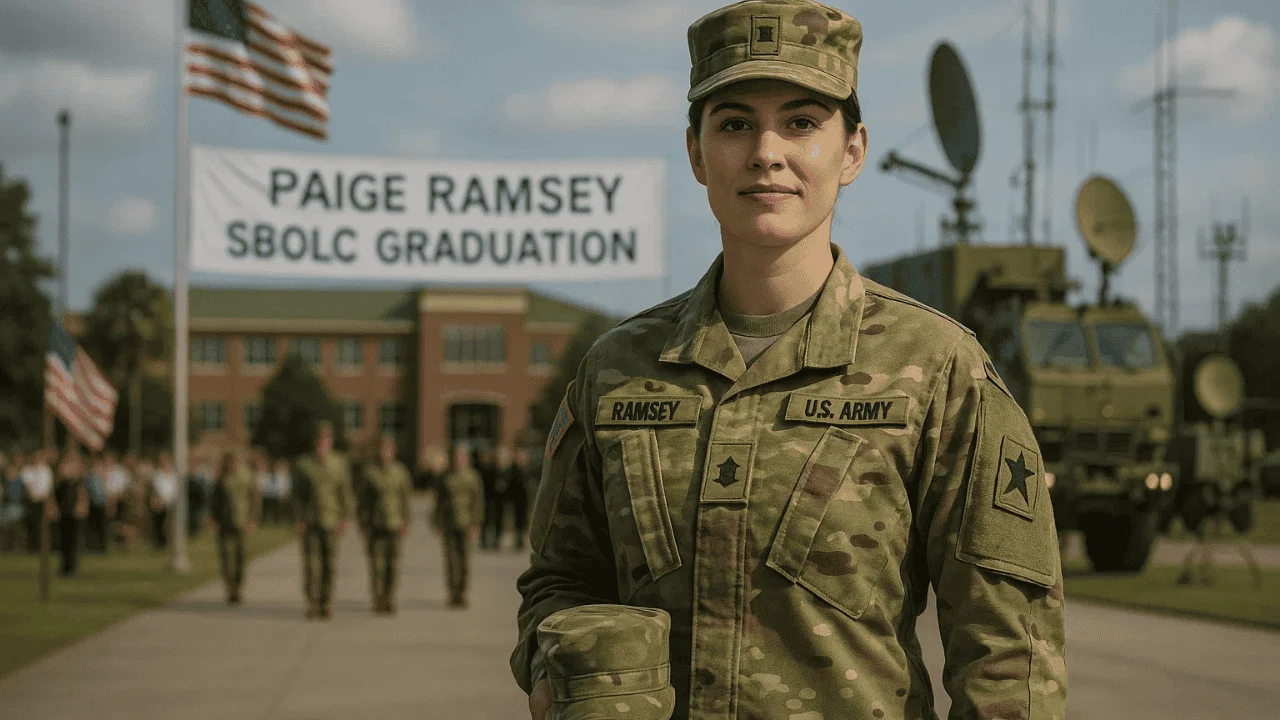
Military graduations represent significant achievements in service members’ careers. The SBOLC (Signal Basic Officer Leader Course) graduation is one such milestone that marks the completion of intensive training.
This article covers everything about Paige Ramsey’s SBOLC graduation and what this achievement means in the broader military context.
What is SBOLC?
SBOLC stands for Signal Basic Officer Leader Course. It’s a training program conducted by the U.S. Army for newly commissioned Signal Corps officers.
The course takes place at Fort Moore (formerly Fort Benning) in Georgia. It typically lasts around 16 weeks and covers essential communication and leadership skills.
Officers learn about network operations, satellite communications, cyber operations, and tactical communications systems. The training combines classroom instruction with hands-on field exercises.
Who is Paige Ramsey?
Paige Ramsey is a military officer who recently completed the SBOLC program. Her graduation represents the successful completion of rigorous officer training.
Like other SBOLC graduates, she has demonstrated competency in signal operations and leadership principles. The graduation marks her readiness to serve as a Signal Corps officer in the Army.
Her achievement reflects months of dedicated training and preparation for military service.
Why SBOLC Graduation Matters
SBOLC graduation is not just a ceremony. It represents several important milestones:
Professional Qualification Graduates are now qualified to lead signal operations units. They can manage communications networks that support military missions worldwide.
Leadership Readiness The course develops leadership skills needed to command soldiers. Graduates learn to make critical decisions under pressure.
Technical Expertise Officers gain deep knowledge of modern military communication systems. This expertise is vital for mission success in today’s digital battlefield.
Career Advancement Completing SBOLC opens doors to various assignments and specializations. It’s the foundation for a Signal Corps officer’s career.
How the SBOLC Program Works
The program follows a structured curriculum designed to build competent signal officers.
Phase 1: Foundation Training
New officers start with basic military skills and Signal Corps fundamentals. They learn Army communication doctrine and equipment basics.
This phase establishes the groundwork for more advanced training.
Phase 2: Technical Training
Students dive deep into specific signal systems and technologies. They work with actual equipment used in field operations.
Hands-on labs teach troubleshooting and network management skills.
Phase 3: Leadership Development
Officers practice leading small units in training scenarios. They develop decision-making abilities and tactical thinking.
Field exercises simulate real-world mission conditions.
Phase 4: Integration and Assessment
The final phase combines all learned skills. Students complete comprehensive evaluations and graduation requirements.
Successful completion leads to the graduation ceremony.
Key Features of SBOLC Training
The program includes several distinctive elements:
- Cyber Operations Training: Understanding network security and cyber threats
- Satellite Communications: Managing beyond-line-of-sight communications
- Tactical Networks: Building and maintaining field communication systems
- Leadership Labs: Practical exercises in leading soldiers
- Physical Fitness: Maintaining Army physical standards throughout training
Benefits of Completing SBOLC
Graduates gain multiple advantages in their military careers:
Immediate Benefits
- Official designation as Signal Corps officers
- Authority to lead signal units
- Access to specialized training opportunities
- Higher responsibility and pay grade
Long-term Benefits
- Career progression opportunities
- Specialized skill development
- Network of fellow Signal Corps officers
- Foundation for advanced courses
Performance Expectations After Graduation
SBOLC graduates are expected to perform at high levels immediately.
They must lead soldiers effectively from day one. Unit commanders rely on their technical expertise and leadership judgment.
New officers typically receive assignments to signal battalions or brigade combat teams. They may lead platoons of 20-40 soldiers or work in staff positions.
The first year after graduation is critical for applying learned skills in real situations.
Tips for SBOLC Success
Based on graduate experiences, here are practical tips:
Before the Course
- Study basic networking concepts
- Review military leadership principles
- Maintain physical fitness
- Prepare mentally for intensive training
During the Course
- Take detailed notes during technical instruction
- Ask questions when concepts are unclear
- Build relationships with fellow students
- Stay organized with course materials
After Graduation
- Seek mentorship from experienced officers
- Continue learning about new technologies
- Focus on developing your soldiers
- Stay current with Army communication doctrine
Common Challenges and How to Overcome Them
SBOLC presents several challenges for new officers.
Technical Complexity The communication systems are sophisticated. Solution: Dedicate extra study time to technical subjects and use available resources.
Time Management Balancing classroom work, physical training, and personal time is difficult. Solution: Create a structured daily schedule and stick to it.
Leadership Pressure Leading experienced soldiers can be intimidating for new officers. Solution: Be humble, listen to NCOs, and learn continuously.
What Comes After SBOLC?
Graduation is just the beginning of a Signal Corps career.
Officers receive their first duty assignments, usually to active Army units. They may serve in the United States or overseas installations.
Many graduates pursue additional qualifications like Ranger School, Airborne School, or specialized signal courses. These enhance their capabilities and career prospects.
The Army invests significantly in continuing education for Signal officers. Technology evolves rapidly, and officers must stay current.
Facts About Signal Corps Officers
Here are important facts about this career field:
- Signal Corps is one of the Army’s oldest branches, established in 1860
- Modern signal officers manage both traditional radios and advanced cyber systems
- The branch motto is “Pro Patria Vigilans” (Watchful for the Country)
- Career opportunities exist in both active duty and reserve components
- Signal officers can transition to civilian tech careers successfully
The Graduation Ceremony
SBOLC graduations are formal military ceremonies attended by families and leadership.
Graduates wear their dress uniforms and receive certificates of completion. The event recognizes individual achievement and welcomes new officers into the Signal Corps community.
Guest speakers often include senior Signal Corps officers who share insights about the profession.
For families, it’s a proud moment celebrating their loved one’s dedication and accomplishment.
Resources for More Information
If you want to learn more about military training programs and career development, visit kawatan.net for comprehensive guides and resources.
The official Army Signal Corps website provides detailed information about career opportunities and training programs.
Final Thoughts
Paige Ramsey’s SBOLC graduation represents significant personal achievement and professional qualification.
The Signal Corps plays a vital role in military operations. Officers like Ramsey ensure that commanders can communicate, coordinate, and execute missions effectively.
SBOLC graduates join a proud tradition of signal professionals who have served since the Civil War era. Their technical skills and leadership abilities are essential to modern military operations.
The graduation ceremony marks not an ending, but the beginning of a challenging and rewarding military career. Success in SBOLC demonstrates readiness to serve, lead, and excel as an Army Signal Corps officer.