

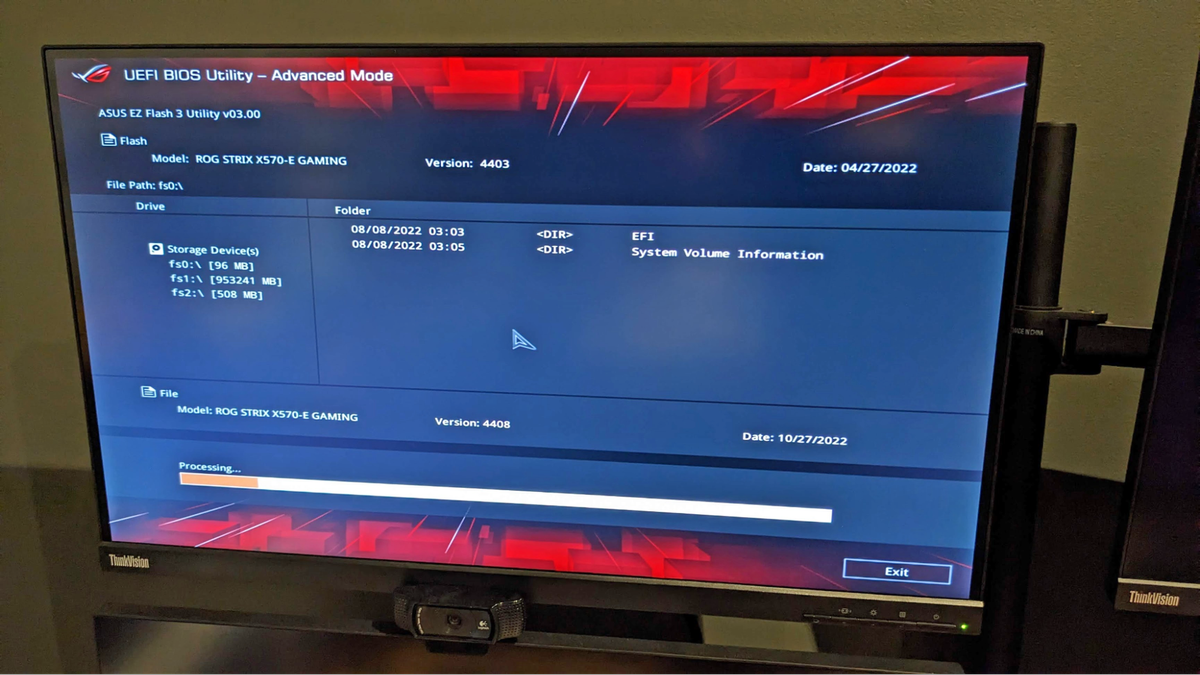
When you encounter “FTS BIOS 702 update download,” you’re likely dealing with firmware that controls hardware at its most fundamental level. BIOS updates exist to fix compatibility issues, patch security vulnerabilities, or unlock performance improvements that weren’t available when your system shipped.
The “702” designation typically indicates a version number—specifically, revision 7.02 in many naming conventions. FTS commonly refers to Fujitsu Technology Solutions, a manufacturer of enterprise-grade servers, workstations, and business computing hardware. If you’re working with Fujitsu equipment, this update likely addresses known issues specific to that hardware generation.
Understanding BIOS Updates in Practice
BIOS sits below your operating system. It initializes hardware during startup, manages power states, and provides the bridge between physical components and software instructions. Unlike application updates that you can roll back easily, BIOS changes rewrite the chip’s firmware directly.
What makes version 702 significant depends entirely on what preceded it. A jump from 701 to 702 might patch a critical boot failure under certain RAM configurations. It could resolve USB detection problems or stabilize CPU voltage regulation. The specifics live in release notes, not the version number itself.
In enterprise environments, these updates often coincide with expanded hardware support—newer CPU stepping revisions, additional storage controller compatibility, or fixes for virtualization edge cases that only surface under heavy workloads.
When You Actually Need This Update
Not every system requires every BIOS revision. If your hardware operates without issues—stable boots, no unexpected shutdowns, proper component recognition—you may not need version 702 at all. The old IT principle holds: if it’s not broken, exercise caution before changing foundational firmware.
You should prioritize this update when:
- Release notes mention a security vulnerability affecting your model
- You’re experiencing hardware recognition failures that match documented fixes
- You’re adding new components that require firmware-level support
- The manufacturer issues an urgent advisory tied to this version
Stability matters more than having the newest number. Mission-critical systems often run older BIOS versions simply because they’re proven reliable under specific workloads.
Locating the Legitimate Download
For Fujitsu systems, the official source is their support portal, typically organized by product line and model number. You’ll need exact model identification—pulled from system information tools or the hardware label—because BIOS files are machine-specific. Installing the wrong version can render hardware unbootable.
The file usually arrives as a bootable image or Windows executable. Bootable images require creating USB media using tools like Rufus, then booting from that media to flash the update. Windows executables run within the OS but often require restart-based flashing that happens during the next boot cycle.
Check file integrity after download. Manufacturers provide checksums (SHA-256 hashes) for verification. A corrupted BIOS file is worse than no update—it can brick the system entirely.
The Update Process: What Actually Happens
Modern BIOS updates have safeguards that older firmware lacked. Dual-BIOS systems maintain a backup chip, so if primary flashing fails, the system can recover from the secondary. Some implementations use protected boot blocks that remain untouched during updates, preserving core boot functionality even during power loss.
Still, the process demands attention. You need stable power—laptops should be plugged in with full battery, desktops ideally on UPS backup. Active flashing takes two to five minutes typically, during which the system must not lose power or be interrupted.
Post-update, the system may boot slower than usual on first start. This is normal—the BIOS is initializing with new parameters, verifying hardware, and rebuilding configuration tables. Settings you customized (boot order, power management, overclocks) often revert to defaults, requiring reconfiguration.
What Changes in Version 702
Without access to specific release notes for your hardware model, I can outline what typically appears in this type of update:
Microcode updates adjust how the CPU handles instructions, often patching security vulnerabilities like speculative execution flaws. These have zero visible impact but matter significantly for system security.
Hardware compatibility expansions might include support for newer memory speeds, additional NVMe protocols, or updated RAID controller logic. If your system couldn’t boot with certain SSDs before, this is where that gets fixed.
Bug corrections address edge cases—perhaps the system failed to wake from sleep with specific peripheral combinations, or fan curves behaved erratically under certain thermal loads. These fixes only matter if you encountered the specific problem.
Security patches close vulnerabilities that firmware-level exploits could target. These rarely affect day-to-day use but become critical in multi-tenant environments or when compliance standards demand current security postures.
Risk Assessment for Your Environment
Enterprise deployments treat BIOS updates differently than individual workstations. You test on non-production hardware first, document every configuration change, and schedule updates during maintenance windows with fallback plans ready.
For individual systems, the calculation is simpler: does the update solve a problem you’re experiencing, or does it patch a security issue that affects your use case? If neither applies and the system is stable, waiting until you have a concrete reason makes sense.
The primary risk isn’t the update failing—modern implementations make that unlikely—but rather the possibility of introducing new behavior in a previously stable system. Firmware changes can alter timing, power management, or hardware initialization sequences in ways that create new incompatibilities with specific software or peripherals.
After Installation: Verification Steps
First boot after flashing should display the new version number during POST (the initial screen before OS loading). Enter BIOS setup to verify version details and reconfigure any settings that reverted to defaults.
Test your normal workload patterns. If the system runs database services, stress those. If it’s a development workstation, run your typical build processes. Watch for changes in boot time, thermal behavior, or performance characteristics.
Document what changed. If you manage multiple systems, tracking which machines run which firmware versions becomes essential when troubleshooting future issues. A simple spreadsheet noting model, serial number, and BIOS version saves hours during incident response.
When Updates Go Wrong
Despite precautions, problems occasionally surface. The system might fail to POST, get stuck in boot loops, or behave erratically post-update. Most manufacturers provide recovery procedures—specific key combinations during boot that force BIOS recovery mode, or physical jumpers on the motherboard that reset firmware to factory state.
For enterprise Fujitsu hardware, support contracts typically include firmware recovery assistance. The support team has tools and procedures for reflashing BIOS remotely or walking you through manual recovery steps that aren’t publicly documented.
If you’re managing this independently, check for BIOS recovery jumpers in your hardware manual. Some systems allow recovery by placing a specifically named file on FAT32-formatted USB media and following a prescribed boot procedure. This varies by model—there’s no universal method.
The Broader Context of Firmware Management
BIOS updates are one piece of firmware management. RAID controllers, network adapters, storage controllers, and baseboard management controllers all have their own firmware that requires periodic attention. In complex systems, these components interact, and updating one without considering the others can create compatibility gaps.
What matters most here is establishing a coherent update strategy. Some organizations update everything to current versions quarterly. Others take a conservative approach, only updating when solving specific problems or addressing documented security issues.
Neither approach is inherently wrong—it depends on your stability requirements versus security posture needs. A payment processing server has different tolerance for change than a development workstation.
Version 702 represents a snapshot in ongoing hardware maintenance. Whether you install it depends less on the number itself and more on what problems it solves relative to your specific situation. The download is straightforward when sourced correctly; the decision to apply it requires understanding both what it changes and what your hardware actually needs.